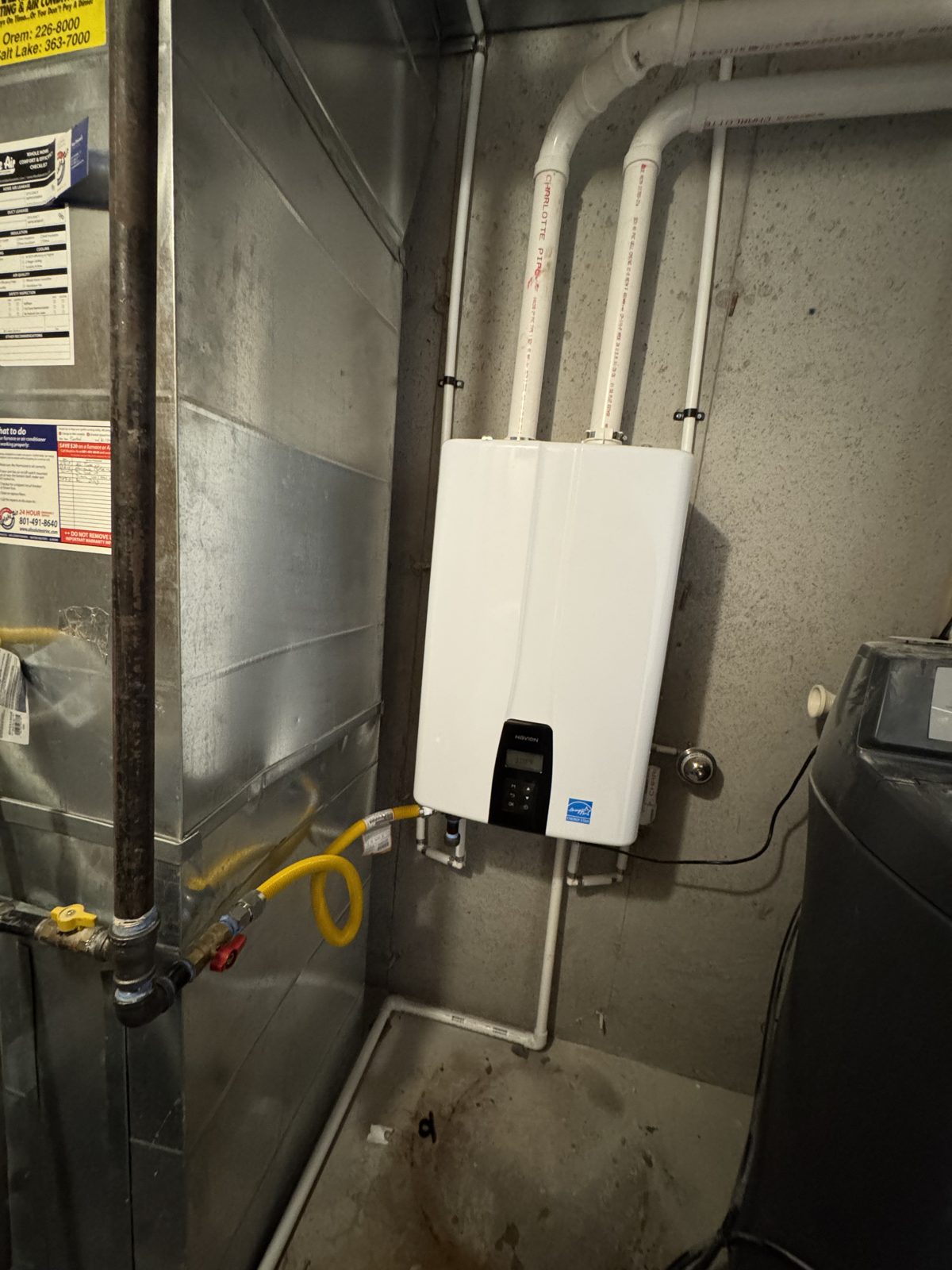
Water Heater Maintenance & Flushing
Looking for reliable water heater maintenance Utah County? You are in the right place: licensed, flat-rate, and based minutes away.
TL;DR: Water heater maintenance in Utah County means an annual sediment flush, anode rod check every 2–3 years, and descaling for tankless units, $100–$250 per visit based on industry estimates. In very hard water it is the difference between an 8-year tank and a 12-year tank. Call 801-874-8479.
Water Heater Maintenance & Flushing in Utah County is one of the core services Utah Service Pros handles daily from its Payson headquarters. Every water heater maintenance & flushing job has a licensed plumber on site under DOPL license #14060509-5501. The team provides flat-rate pricing, so the quote you approve is the price you pay.
How often should a water heater be flushed in Utah County?
Once a year. Utah County water is very hard by USGS standards, above 180 mg/L, and sediment settles fast. An annual flush plus anode rod check is the cheapest way to reach the far end of a tank’s 8-12 year life.
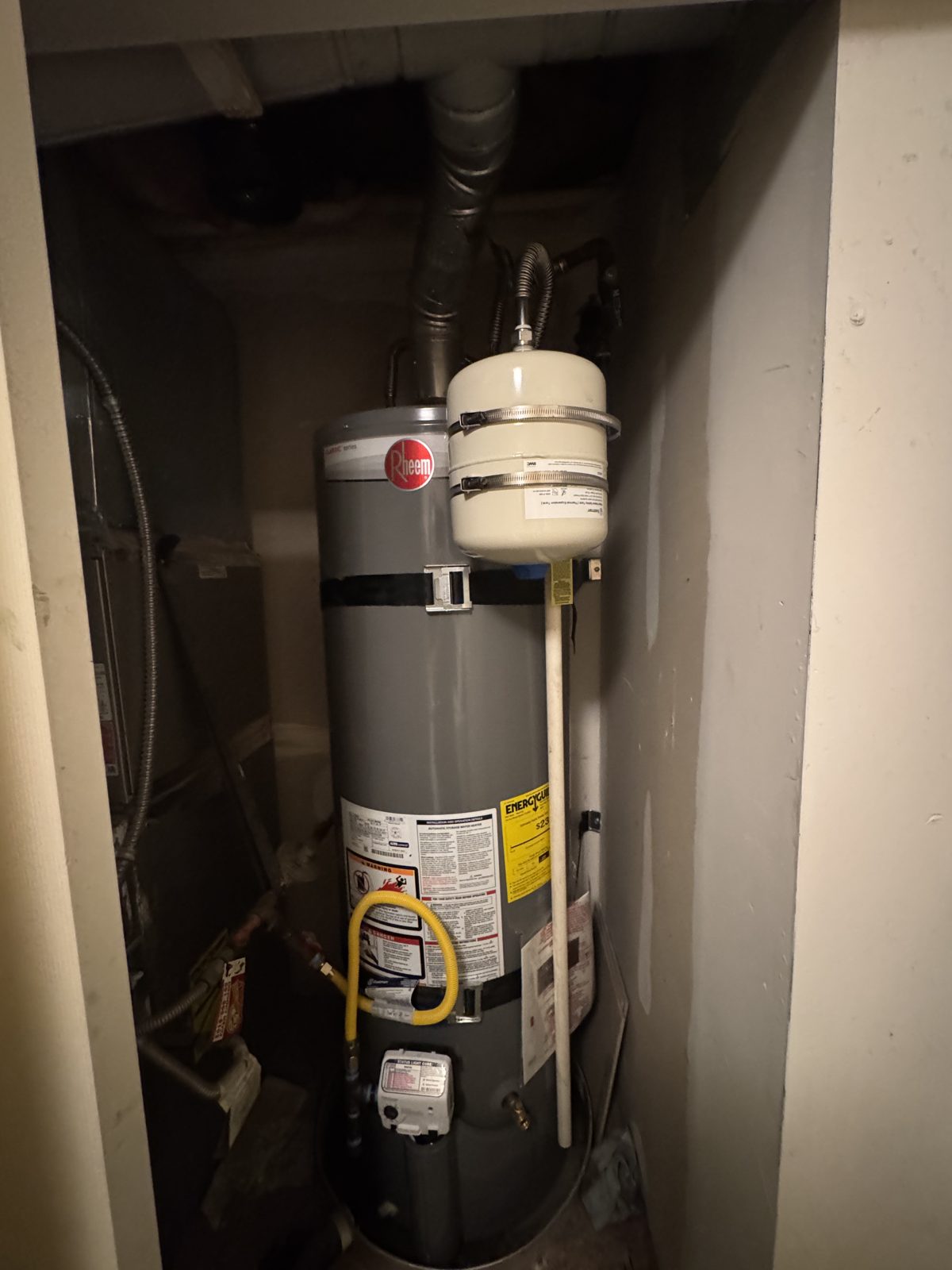
What does the anode rod actually do?
The sacrificial anode corrodes so the tank steel does not. Once the rod is consumed, usually in 3-5 years here, corrosion turns on the tank itself. A $50-$150 rod swap can buy years of tank life.
Water Heater Maintenance Utah County: typical costs
| Service | Typical range | Notes |
|---|---|---|
| Annual flush service | $100-$300 | Removes hard-water sediment |
| Anode rod replacement | $150-$400 | Check every 2-3 years |
| T&P valve test and replace | $100-$250 | Critical safety component |
Ranges are industry estimates; your written quote is exact before work begins.
Good to know
- Annual flush doubles as a capacity restorer
- Set thermostat to 120 F for safety and efficiency
- Maintenance records help with warranty claims
For water heater maintenance Utah County you can book today, call Utah Service Pros at 801-874-8479.
Why does hard water demand annual flushing?
Every gallon heated drops minerals; in Utah County’s very hard water (180+ mg/L on the USGS scale) that sediment accumulates fast, burying the burner’s heat path or the lower element. The result is slower recovery, rumbling, higher fuel use, and early tank fatigue. An annual flush drains the sediment before it hardens into a permanent bed.
What is an anode rod and when is it replaced?
The sacrificial anode is a magnesium or aluminum rod that corrodes so the tank wall does not. In aggressive water it consumes in 2–4 years; replacing a $50–$150 rod (industry-typical) is the cheapest life-extension a tank gets. Once the rod is gone, corrosion turns to the tank itself, the failure that ends with replacement.
What does a maintenance visit include?
Flush and sediment removal, anode inspection, T&P relief-valve test, thermostat and connection check, and on tankless units a full descaling cycle through isolation valves. Pair maintenance with a softener and the sediment problem largely disappears. Diagnosing an existing fault instead? See water heater repair or the hub.
Expert-reviewed by Utah Service Pros. Last updated June 2026.